Want acreage where your horses can thrive without giving up Jupiter’s coastal lifestyle? If you are weighing barn plans against commute times and drainage maps, you are not alone. In this guide, you will learn where to focus your search near Jupiter, what Palm Beach County rules typically allow, how Florida’s soils and water shape a workable horse property, and a simple checklist to use before you make an offer. Let’s dive in.
Where to buy near Jupiter
Choosing the right area is about fit. Each community west of Jupiter offers a different balance of acreage, rural character, and access to equine services.
Jupiter Farms
Jupiter Farms sits just west of the town of Jupiter. It offers a semi-rural setting with small to mid-size parcels that work well for hobby horses and private barns. You get quick access to coastal amenities while keeping turnout and trails close to home. The feel trends quiet and private compared with more event-focused hubs.
Loxahatchee and Loxahatchee Groves
These established areas have larger lots and a long agricultural history. You will find many equestrian properties, mixed agricultural uses, and a more rural feel than closer-in suburbs. If you want space, lower density, and room for a thoughtful barn and paddock layout, this area is a strong candidate.
The Acreage
The Acreage offers rural residential living with many large parcels suited to private equestrian use. It is convenient to the western county’s equestrian infrastructure and services. Buyers often look here for value per acre and the ability to design functional, low-density layouts.
Wellington and Royal Palm Beach
Wellington is the region’s equestrian center with shows, training, and a deep bench of equine services. Parcels with acreage exist, but the environment is more developed and focused on competition and professional training than purely rural living. Properties west of Jupiter typically offer more acreage per dollar and a quieter pace, but expect a longer commute to Wellington’s shows and services.
Zoning and permits you must verify
Palm Beach County zoning and permitting rules determine what you can build and how you can use the property. Always verify parcel-specific details with county officials before you go under contract.
Use, animals, and accessory structures
- Zoning districts often distinguish agricultural, agricultural-residential, and estate or residential categories.
- Private horse keeping on residential acreage may be allowed in many districts, while commercial boarding, training, or riding schools typically require special or conditional use approvals.
- Setbacks, lot coverage, building heights, lighting, and accessory structure rules for barns, arenas, and storage are defined in the county land-development code.
- Homeowners’ associations or deed restrictions can add limits on animals, structures, noise, and lighting that are separate from county rules.
Common permits to plan for
- Building permits for barns, covered arenas, stables, and homes.
- Special or conditional use approvals for commercial boarding, lessons, or frequent public events.
- Septic and well permits where municipal utilities are not available.
- Surface water management or environmental permits if you alter drainage, fill, or impact wetlands.
- Driveway or access permits for county or state roads.
- Electrical, plumbing, and mechanical permits for barn lighting, fans, wash racks, and offices.
Taxes and agricultural classification
Florida offers agricultural classification, often called greenbelt or agricultural assessment, that can reduce property taxes for bona fide agricultural use. The Palm Beach County Property Appraiser handles eligibility and applications, which typically require proof of ongoing agricultural activity. Verify the current tax status, any prior agricultural claims, and how changes in use, such as adding commercial boarding, could affect classification.
Site selection: access, soils, and drainage
South Florida’s environment rewards buyers who prioritize access, soils, and water early in the process.
Access and road conditions
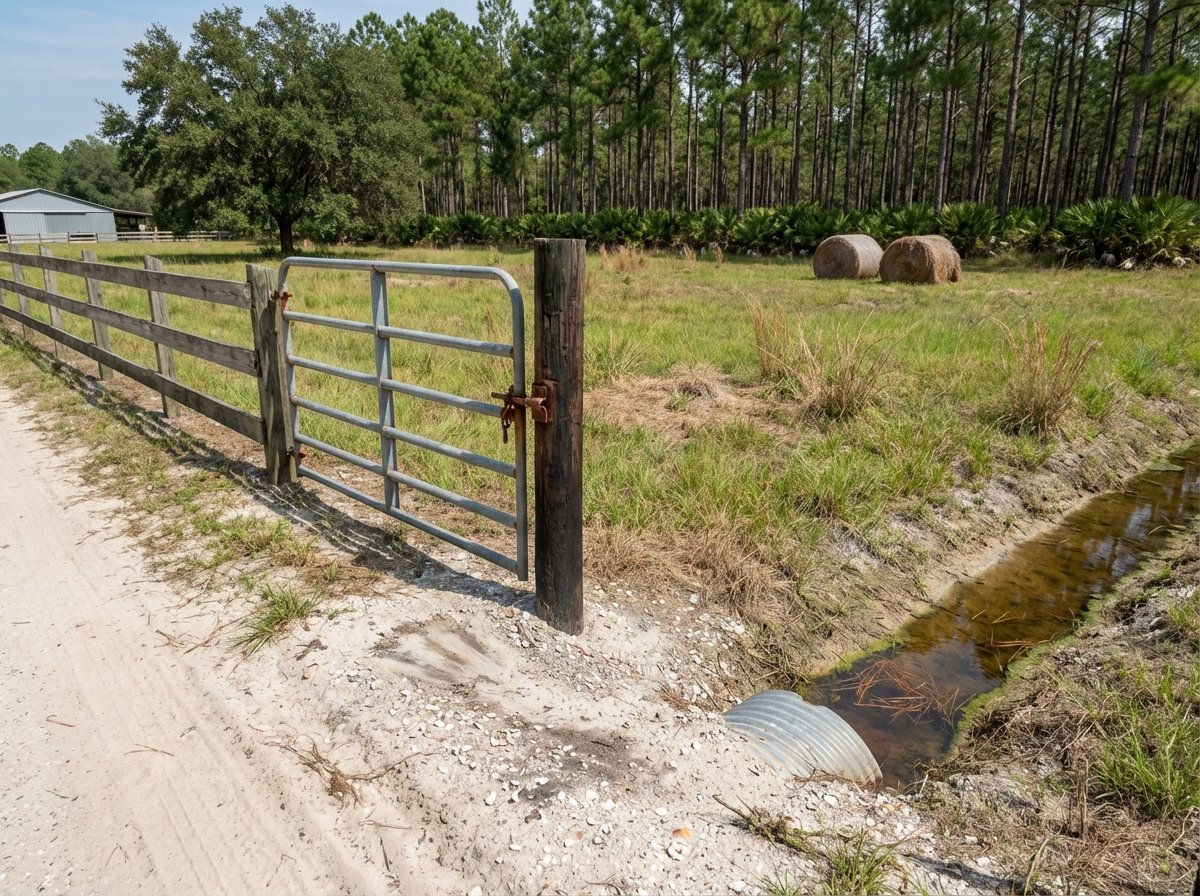
- Many acreage properties rely on unpaved or private roads. Confirm who maintains the road and whether it stays passable year-round for horse trailers, feed deliveries, and emergency vehicles.
- Evaluate daily drive times to trainers, vets, and event centers. Traffic on main arteries can affect whether a location works for your routine.
Soils, percolation, and septic
- Many rural lots use septic systems. Order percolation testing and a septic feasibility review early. High water tables and slow percolation can limit system design and placement.
- Consult soils data to guide pasture drainage, arena base design, and septic performance. Better soils reduce maintenance and improve footing resilience.
Drainage, water table, and flood risk
- Expect a pronounced wet season in summer and early fall. Functional surface drainage with swales and retention helps keep paddocks, arenas, and barn aprons usable.
- Wetlands and surface water features may require permits to fill or regrade. Plan around these constraints rather than fighting them.
- Even inland parcels can lie in mapped flood zones or experience localized flooding. Confirm FEMA flood zones and seek local floodplain details.
Utilities and essential services
- Municipal water may not be available. Plan for wells and the required permits.
- Verify electrical service capacity and the cost to extend lines for barns and arena lighting.
- Check internet options for cameras, remote monitoring, and work-from-barn needs.
- Understand response times for emergency services and mobile equine care.
Due diligence documents to order
- Topographic and floodplain mapping with FEMA flood zone confirmation.
- Soil borings and percolation tests for septic and arena subbase design.
- A current boundary survey showing easements, setbacks, and legal access.
- Wetland delineation and status review if there is standing water or seasonal saturation.
- Utility availability and capacity letters from providers.
Planning barns, paddocks, and arenas
Good siting and layout decisions upfront save time and money for years.
Barn siting priorities
- Place barns on the highest, driest ground with positive drainage away from foundations and stalls.
- Keep daily movement efficient by locating barns near turnout and safe lanes.
- Ensure turning radii and load-bearing drive surfaces for trailers, delivery trucks, and emergency vehicles.
Arena design and orientation
- Select ground with natural fall and no low spots. Build a well-draining subbase and a slight crown for surface runoff.
- Orient to reduce low-angle sun in riders’ eyes during peak use and consider prevailing winds for dust control.
- Lighting can trigger permitting and neighbor concerns. Plan fixture shielding and confirm setbacks and hours of use.
Paddocks, pasture rotation, and fencing
- Use smaller rotational paddocks to limit overuse, manage parasites, and protect turf.
- Design safe lanes between barn, turnout, and wash areas to reduce slips and conflicts.
- Choose durable horse-safe fencing and confirm any county rules on height or type.
Water, wash areas, and manure
- Provide reliable water access and storage for dry spells.
- Route wash rack drainage to approved systems. Direct discharge to wetlands or open ditches is typically not allowed.
- Site manure storage downwind with runoff controls. Local ordinances and surface water rules can influence design.
Environmental and neighborhood considerations
- Plan for dust and noise management with suppressants and vegetative buffers.
- Respect dark-sky and lighting rules with shielded fixtures and thoughtful schedules.
- Use buffer plantings as windbreaks and privacy screens while protecting drains and septic fields from root impacts.
When to bring in professionals
- A civil engineer or equestrian site planner for drainage and arena foundation design.
- A licensed contractor experienced with equine structures and local permitting.
- Horticultural or extension experts for pasture species and shade planning.
Lifestyle fit: year-round vs weekend
Your routine, staffing, and service access will shape the right location and buildout.
Climate and horse care
- Florida supports year-round riding, but summer heat and humidity demand shade, ventilation, and heat-stress monitoring.
- Expect long fly and mosquito seasons. Integrated fly control and manure management reduce breeding sites.
- Rotational grazing and a parasite control program support pasture and horse health.
Year-round operations
- Daily care often requires part-time or live-in help. Plan for staff access, parking, or accommodations if needed.
- Proximity to vets, farriers, feed suppliers, and emergency hospitals affects reliability and cost.
- Reliable utilities and storage are essential for arena upkeep, turnout, and feed programs.
Weekend or seasonal use
- Pair gate security and cameras with a local caretaker or mobile services to bridge gaps between visits.
- Consider larger paddocks or a dry lot to manage turnout when you are not on site every day.
Emergency coverage
- Confirm local emergency veterinary coverage and create a transport plan before you need it.
- Keep contacts and directions posted at the barn for caretakers and responders.
Buyer checklist: pre-offer to close
Use this list to structure your due diligence.
- Confirm permitted uses for horses and any deed or HOA restrictions.
- Obtain a recent survey showing setbacks, easements, and legal access.
- Order soils and percolation tests and evaluate septic, arena, and barn feasibility.
- Confirm FEMA flood zone and local floodplain details. Review surface water and wetland status for planned site work.
- Request utility proximity and capacity letters. Get estimates for electrical service and well or water connections.
- Review property tax classification and prior agricultural exemptions. Assess changes under your intended use.
- Get local estimates for arena construction, barn upgrades, fencing, and long-term maintenance.
Next steps
Buying equestrian acreage near Jupiter is equal parts vision and verification. When you pair a clear plan for horses and lifestyle with smart due diligence on zoning, drainage, and access, you set up a property that rides well in every season. If you would like a confidential conversation about parcels in Jupiter Farms, Loxahatchee, The Acreage, or Wellington, connect with Pioneer Land | Hunting | Ranches | Conservation. We combine local land legacy with high-touch, investor-ready marketing to help you start your land legacy.
FAQs
How do Jupiter-area communities compare for horse properties?
- Areas west of Jupiter, like Jupiter Farms, Loxahatchee, and The Acreage, offer larger lots and a quieter rural feel, while Wellington is the equestrian hub with shows and professional services.
What zoning issues affect keeping horses in Palm Beach County?
- Zoning districts set rules for animal counts and accessory structures, and commercial uses such as boarding or lessons usually need special or conditional use approvals.
What permits do I need to build a barn or arena near Jupiter?
- Expect building permits, possible environmental or surface water approvals if grading or filling is planned, and electrical, plumbing, and mechanical permits for barn systems.
How should I evaluate flood and drainage risk on acreage?
- Confirm FEMA flood zones, review site topography, and assess wet-season drainage. Plan swales, retention, and arena bases that shed water away from barns and paddocks.
What is Florida’s agricultural classification for taxes?
- The agricultural or greenbelt classification can reduce taxes for bona fide agricultural use. The county property appraiser manages eligibility and applications.
Are private roads a concern for horse properties?
- Yes. Verify who maintains unpaved or private roads and whether they remain passable year-round for trailers, deliveries, and emergency access.